Blog
The Case for Self-Service Printing in Student-Heavy Zones
Key Takeaways
● Student-heavy zones expose the limits of staff-dependent printing models.
● High-density areas need faster, more independent workflows.
● Students prefer completing printing without waiting or coordination.
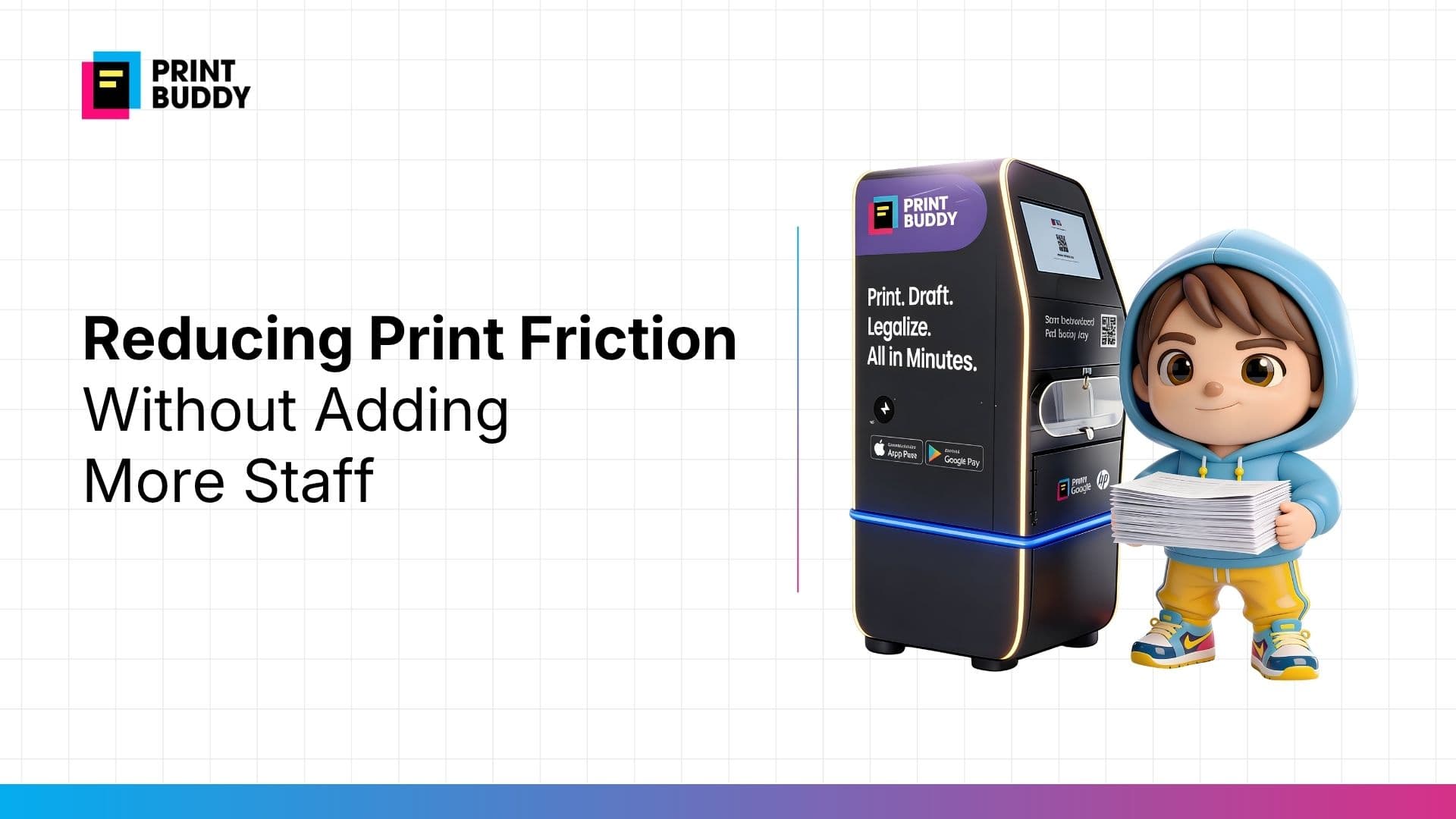
● A self service printing kiosk improves throughput and reduces queues.
● Pay and print and mobile-first workflows make self-serve systems scalable. Some parts of campus behave differently Not all areas on campus experience the same kind of demand. Libraries during exams. Academic corridors between classes. Common study zones late in the evening. These are student-heavy zones. They are defined not just by how many students are present, but by how many of them are trying to complete tasks at the same time. Printing demand in these areas is not occasional. It is continuous, and often urgent. Why traditional models struggle here In lower-demand environments, even slower or staff-supported printing systems can function reasonably well. But in student-heavy zones, the same systems start to break. The reasons are simple:
● too many students need help at once
● queues grow faster than they can be cleared
● repeated interactions slow the system down
● dependency on staff creates bottlenecks Even if the system works in theory, it does not hold under pressure. The problem is not demand. It’s dependency. High demand is not the issue. Dependency is. When every print request requires:
● explanation
● coordination
● manual handling
● or supervision the system cannot scale. Each additional student increases the load on the same process. That is why queues form quickly in student-heavy zones, even when the number of printers seems sufficient. What self-service changes Self-service shifts the structure of the system. Instead of relying on someone to move each step forward, students move through the process themselves. A typical self-serve flow looks like:
● upload the file using print with mobile
● select print preferences
● complete pay and print
● collect output from a self service print kiosk There is no need for coordination or assistance. Each user completes the process independently. Why independence improves speed In high-density zones, speed is not just about how fast a printer works. It is about how quickly each student moves through the system. Self-service improves this by:
● removing waiting time for assistance
● eliminating repeated explanations
● allowing multiple users to prepare in parallel
● reducing time spent at the kiosk The result is higher throughput without adding complexity. Why this matters during peak usage Student-heavy zones often overlap with peak demand periods. That includes:
● submission deadlines
● exam preparation windows
● late-night study sessions
● back-to-back class schedules During these times, even small delays multiply quickly. A self service printing kiosk handles this better because:
● each interaction is shorter
● the process is consistent
● there is no dependency on availability This keeps the system stable even under pressure. The role of mobile-first workflows Mobile-first printing strengthens self-service systems. Students already have their files on their phones. When they can:
● start using print with mobile
● complete payment digitally
● approach the kiosk only for execution the process becomes faster. It also reduces crowding at the kiosk itself. Students spend less time interacting with the machine, which helps more users move through the system. Why predictability matters in dense environments In crowded spaces, uncertainty creates hesitation. Students want to know:
● the system will work
● the process will be the same every time
● they won’t need help to complete it Self-service creates that predictability. The steps do not change based on location or demand. That consistency makes the system easier to trust. From bottlenecks to flow In student-heavy zones, the goal is not just to provide printing. It is to maintain flow. Without self-service:
● queues build
● delays increase
● frustration rises With self-service:
● movement stays continuous
● interactions stay short
● the system adapts to demand Printing becomes part of the environment, not a disruption within it. The real case for self-service Self-service printing is not just a convenience. In student-heavy zones, it is the only model that scales effectively. It reduces dependency, increases speed, and keeps the system predictable under pressure. And when that happens, students stop treating printing as a problem to manage. They simply use it — even in the busiest parts of campus. Tags self service printing kiosk print kiosk document printing kiosk self service print kiosk smart print kiosk pay and print print with mobile instant print kiosk print out near me online print near me